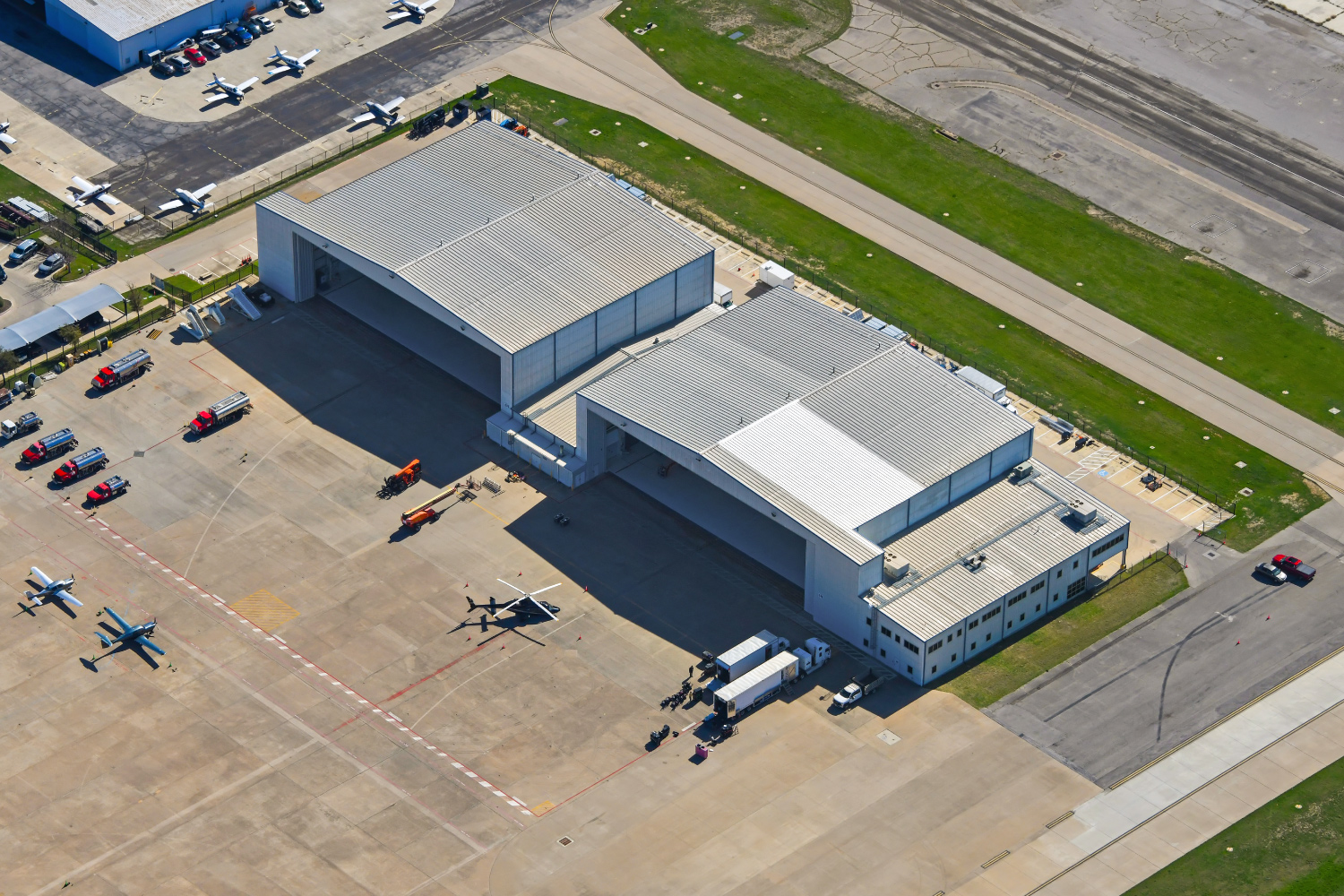

At Tri-Cities Airport, Aerospace Park offers 160 acres for aerospace development, with access to an 8,000-foot primary runway. The airport is also strategically positioned between Miami and New York within Tennessee’s aerospace cluster, which includes more than 50 aerospace and defense companies.
While these advantages matter, aerospace development takes more than available land and runway access. Companies evaluating a new location need confidence in the surrounding ecosystem, including workforce, supply-chain capacity, infrastructure, housing, education, and long-term community support.
Scott Rightnowar, Head of Commercial Aviation at ARCO National Construction, recently joined Tri-Cities Airports’ podcast series on Aerospace Park to discuss the factors shaping aviation development opportunities.
ARCO’s design-build team can help aviation clients connect site selection, planning, design, infrastructure, and construction in one coordinated process, bringing project-level requirements into the broader readiness conversation early.
Build the Foundation First
Communities can improve their competitiveness by focusing on what they can control: build-ready sites, utilities, workforce development, housing, school capacity, incentives, grants, and public-private partnerships. These fundamentals reduce uncertainty for prospective users and demonstrate that a market is prepared to support both current operations and future growth.
Early coordination is also critical. Site readiness, utility planning, facility requirements, infrastructure, and schedule need to be considered together before a company commits to a location.
Target the Right MRO Opportunity
Aviation demand is growing as aircraft backlogs and aging fleets keep more aircraft in service longer. At the same time, the country faces a shortage of maintenance, repair, and overhaul (MRO) facilities.
Large airline MRO operations are unlikely to be an immediate fit for smaller, tertiary markets without hub-level traffic. However, third-party providers serving regional aircraft may present a more practical opportunity. The priority is identifying the aircraft types, operators, and service needs that fit the local market.
Look to Emerging Aviation Uses
Emerging technologies may offer another path for aerospace parks. Electric vertical takeoff and landing aircraft, drones, testing facilities, and specialized aerospace uses need access to airspace, room to test, and facilities built around their operational requirements.
These opportunities depend on the right infrastructure, testing capacity, partnerships, and facility strategy. For each use, operational requirements should inform site planning, infrastructure, and facility design from the start.
Compete with a Clear Strategy
Markets like Florida, Texas, Oklahoma, and North Carolina have strengthened their aerospace positions through incentives, financing programs, workforce investment, and statewide strategies. While other markets do not need to replicate every program, they do need a realistic plan that builds on local strengths and addresses readiness gaps.
Overall, aerospace growth is built through preparation. Markets with a well-planned site, capable infrastructure, workforce capacity, community support, and the right delivery partners are better positioned to act when opportunity arrives.
ABOUT ARCO NATIONAL CONSTRUCTION
ARCO National Construction is a design-build general contractor with experience delivering complex facilities for aerospace and aviation clients nationwide. By integrating preconstruction, design coordination, construction, and project delivery, ARCO helps clients make informed decisions early and move forward with greater certainty.